Showing posts with label xoolon. Show all posts

Saturday, 27 March 2010

Boot madness!

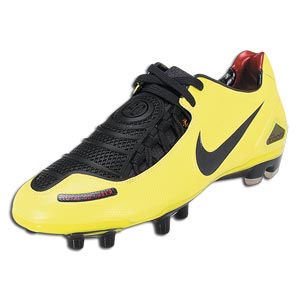
Whatever happened to traditional black football boots? In a photograph of a park team in the local newspaper last week, I counted that six out of the eleven players were wearing coloured boots. And I don't mean red laces or a white tongue, I mean full on, visible from space fluorescent yellows and brilliant blues. The bright green number that Wayne Rooney wears at the monment looked a popular choice as well.


Now is it me, or do you actually have to be a pretty good player to get away with boots like that? As far as i'm concerned, some overweight, middle aged bloke trying to do step-overs in his Wayne Rooney boots on a Sunday morning makes himself a prime target for some particularly crunching tackles. Then again, if they're all wearing them, maybe not!

How long 'til those buffs catch on?

Monday, 1 March 2010

When is a sport not a sport?

What exactly is it that makes a sport a sport? I had this debate with a friend over a game of snooker the other day, and after much animated discussion we still could not agree.
"It's not a game, it's a sport!"
"No, it's a bloody game!"
So as I wandered home, I pondered this deeply philosophical question, and came up with a list of possible criteria.

Skill - Does sport have to involve skill? Most sports do require skill in some form, but what about things such as distance running? Running is not in itself a particularly skillful activity, but it is undoubtedly a sport.

Physical exertion - Does sport have to involve physical effort? The Olympic motto is 'faster, higher, stronger', although it could be argued that the plethora of Olympic 'sports' means that this is now a bit of an anachronism. Has sport moved on from simply being a measure of physical excellence?

Competition - Does sport have to be competitive? Competition is basically what makes sport exciting and inspirational from an observer's point of view. However, a casual kick-about in the park or a jog round the block to keep fit is surely still sport, even though it isn't competitive.

Rules - Does sport have to be organised and played according to rules? I think competitive sport does, in order to ensure fair competition, but what about 'freestyle' sports or activites, such as parkour?

For me, I think that the basic divide between sport and other activites is physical exertion. At the same time though, there are physical activites I could think of which I wouldn't class as sport.

So what do you think? What makes sport sport...

Saturday, 9 January 2010

App launch article

TECHNOLOGY is not normally associated with an active lifestyle. Whether it is kids slumped in front of the telly or frantically tapping at the games console controller, the image conjured up tends to be one of slovenliness rather than healthy activity.

In this age of rising obesity, sedentary activities are viewed as part of the problem. So it comes as something of a surprise to learn that one innovative Sheffield firm views technology as a key part of the cure to the country’s size problem.

Martin Spence is the founder of Xoolon, an online sports academy based in the national city of sport, which aims to harness new technologies to get kids active again.

“Technology and physical activity don’t need to be mutually exclusive,” he said. “We can provide a simple and fun way to record and share activity, which really gets kids involved in the process.”

Xoolon has developed and released an app for the iPhone as the latest part of its project to improve the health of the nation’s youth.

Martin feels that the only way to engage young people in a healthier way of life is to tap into things that they are interested in and use on a day-to-day basis. He has concluded that the incredible popularity of social networking sites and prevalence of mobile phones provides the best means to get kids’ attention.

The new app allows kids to measure and record physical activity and instantly upload and share their results with others on Facebook, Twitter and e-mail via their mobile phone.

They can do this in their own time, or after a training session or PE lesson.

“Kids are generally forbidden from using technology at school, unless it’s in a strictly controlled environment,” said Martin.

Naturally, this makes letting them loose on mobiles and the internet a great way to capture the attention of these ‘technology natives’.

“They love the chance to have a play around, and they’re naturals when it comes to using the technology. They’re online and uploading results in no time" said Martin.

“Millions of people interact with each other via social networking sites, like Facebook. They share pretty much anything on there. All you need is internet access, and the fastest way to get people online is through mobile phones.”

The app is designed to complement the Xoolon website, which already allows schools and sports clubs to upload and track their pupil’s sporting statistics and develop individually-tailored sports regimes.

For Martin, the crucial elements of Xoolon are that it makes physical activity a shared experience, introduces a competitive element and associates it with something cutting-edge. This means that kids enjoy using it and have an incentive to carry on.

No matter how attractive the product, though, the scale of the problem makes tackling it a huge challenge.

According to Department of Health figures, child obesity is at its highest ever level and rising, as are obesity related health problems. Meanwhile, levels of physical activity are dismally low – a sure-fire recipe for a public health disaster.

Martin is unequivocal about the problem.

“Obesity used to be a social stigma, but it’s becoming acceptable because it’s normal,” he said.

“Many kids are doing less than an hour of physical activity a week - and that’s including walking.

“The level of fitness of many young people is extremely low. Inactivity has reached such a high level that obesity is the natural outcome.”

The government, stunned into action perhaps by the looming economic cost of rising obesity, has launched its own Change4Life campaign aimed at altering people’s lifestyle habits.

Its tendency to present things in terms of simple ‘do’s’ and ‘don’ts’ is not something which Martin feels will be effective in the long-term.

“This is just an attempt at a quick fix, a short term measure. We are decades from changing habits – quick fixes are no good,” he said.

“We need an entire culture change, where physical activity is part and parcel of kids’ everyday lives and they are motivated to look after themselves.”

If Xoolon catches on, maybe technology, rather than being viewed as part of the obesity problem, can be the key to realising this vision.

Thursday, 27 August 2009

Athletic Inspiration

The World Championship Athletics in Berlin was one of the best I can remember.

Tainted by drug scandals and performed in front of increasingly sparse crowds, athletics has needed a shot in the arm for some time and hopefully this excellent championships can go some way to providing it.

Usain Bolt is nothing short of a phenomenon, and his sensational double world record cements his status as the most famous sportsman on the planet. Outrageously talented and effortlessly charismatic, he could fill any stadium anywhere in the world. He is the best thing to happen to athletics in a long time.

There were other great moments too. One of the most dramatic was when German high jumper Ariane Friedrich ran up in a completely silent stadium, before sailing over the bar and being greeted by a sudden eruption of noise.

As a Sheffield based company, though, we have to give the biggest mention to Jessica Ennis, who led from the front to become the new heptathlon World Champion. She took up athletics after attending a summer athletics week at the city's Don Valley Stadium. It just goes to show what the possibilites are if youngsters can be encouraged to give sport a go.

With superstars like Bolt and role models like Ennis, now is the perfect time to get more young people involved in athletics. The London 2012 Olympics represent a once in a generation opportunity to inspire young people to take up athletics and leave a legacy of a more healthy and successful nation. And if they're half as good as Berlin, we're in for a treat.

Wednesday, 12 August 2009

Xoolon to launch new app!

PCs, mobile phones, MP3s. In recent years these products have transformed from relative luxuries to lifestyle essentials. Whether it is for making videos, taking pictures, listening to music or simply chatting, they are a ubiquitous part of modern life. For the current generation of young people, their presence is a given and using them is second nature - they are unafflicted by technophobia!

At Xoolon, we think that this represents a fantastic opportunity. That is why we are developing a new app for the iPhone and iPod touch, which will be available from Apple's app store.

By tapping into technology savvy young people and making the whole Xoolon experience more interactive, we feel that we can add another level of interest to our project and entice more young people into doing sport. The new app will enable youngsters to easily set up their own Xoolon games, record, submit and compare results and share them along with their thoughts via facebook, twitter and e-mail. It will also allow the quick and easy submission of scores after school or a training session so that an accurate and up to date record of sporting progress is maintained.

Our experience in schools suggests that young people are very keen to use this technology. Within minutes of letting them loose they are uploading results and comparing with friends - with the competitive spirit very much in evidence! Even those who would not normally be 'sporty' get sucked in by the excitement which is generated, and want to have a go themselves. This demonstrates to us that phones and computers can, within the right context, be very valuable educational and motivational tools. They are not just the unwelcome distraction which they are often viewed as. Sometimes the kids just need to be freed to have a go!

We are very hopeful that by intertwining sport and technology, we can get more kids engaged in sport and take Xoolon to a new level - we certainly think that this is the way forward.

What do you think - do you agree? Do you think the app is a good idea? We'd love to hear plenty of feedback on this, so leave your comments below!

Monday, 27 July 2009

British cycling's Tour de Force

The tremendous performances of Bradley Wiggins and Mark Cavendish in this year's Tour de France underlined the burgeoning strength of British cycling.

Wiggins' fourth place is the joint best Tour placing by a British rider, matching Robert Millar's 1984 effort, whilst Cavendish won an incredible six stages - including a quite stunning display of power on the prestigeous Champs Elysees sprint. These successes come on the back of last year's record Olympic medal haul, and bode well for the creation of a British Tour team in future years. Is it conceivable that there could be a British tour winner 'within five to ten years'? It is performance director Dave Brailsford's stated goal.

The success acheived by British cycling over the last two years shows what can be acheived when talented individuals are identified and given expert coaching within a clear structure, married to the technological exellence which is so important in a sport such as cycling. Other sports need to learn from this - too many don't have a logical structure or clear sense of priorities, whilst grass-roots and particularly school sport often shy away from technological innovation.

At Xoolon we feel we can make a difference here. As well as being a talent identification tool and coaching aid, our online 'sportal' provides a way of introducing technology into sport. For the current generation of children, using a computer is second nature and entering results online really helps to give them a sense of their own sporting achievements. The database of statistics can then be used not only in PE, but also, for example, in maths, or in food (to design a 'sports diet', say). We feel that schools really need to start embracing this brand of technological innovation.

If the value of technology, alongside top-notch coaching, begins to be more widely recognised at school level, perhaps we will begin to see more sports replicating British cycling's success.

As usual, please leave your thoughts. What do think of technology in sport? What can we learn from British cycling's success? Let us know!

Tuesday, 21 July 2009

Mental strength key to Ashes success

Panesar, eyes as wide as a frightened deer and encircled by a pack of salivating Australian close fielders, takes guard in the gathering dusk. The crowd watch silently as he prods nervously forward, deflecting the ball away - they are witnesing the last rites of a condemned man, a condemned team.

Lords, a little over a week later. Flintoff steams in, releasing missile after missile, each as fast as the last. Australian bodies are bruised, stumps shattered. One wicket remains. Swann bowls, Johnson swipes. Misses. Bowled! The crowd cheers in delight - England have won, they are one up! But how? The implausibility of the scenario only increases the drama. This was sport in the mind, sport at its best.

The remarkable turn-around between the first and second Ashes tests serves to highlight the vital importance of mental resilience in sport. At Cardiff, Anderson and Panesar refused to bow to defeat, despite its seeming inevitability. The target was distant, but they clung to it resolutely, each ball successfully negotiated representing a step towards survival. A defeat was turned into a draw, but felt like a victory.

Suddenly, England were buoyant, positive and confident. They played the second test full of belief that they could win, rather than nervousness that they might not. The superb Flintoff played through the pain barrier for the team, as did Kevin Pieterson. England displayed a level of commitment, resilience and belief that they lacked for the first four days of the series, and that is why they claimed the win and the lead.

This is also why Xoolon has developed a mental toughness test as part of its performance profiling. Youngsters can rate their mental resilience, determination, self-belief and confidence and set themselves targets to improve. This can help them not only in sport, but also in the classroom and in their future lives.

Now it is the turn of the Australians to show their mental toughness. They need to show that they can bounce back, and rediscover the form and confidence which they displayed in the first test. If they would like to ask Xoolon for any advice, we would be happy to oblige!

What do you think? Is mental strength as important as physical ability? Is profiling it an effective way to encourage improvement? Can the Aussies bounce back? Let us know your thoughts...

Sunday, 12 July 2009

Xoolon at Downend School

The Xoolon team was at Downend School in Bristol this week, and the day went down a storm with pupils and staff. Hundreds of Year 7 students enjoyed a series of athletic events, and even a midday downpour couldn’t dampen the spirits!

The high turnout was particularly impressive, with around 95% taking part – up to 40% more than what might be expected for a regular sports day, according to teachers. And it is probably fair to say that 100% of the competitors were giving it their all, with some especially memorable ‘race faces’ being exhibited in the 100 metres!

The youngsters evidently thrived on the competition, straining every sinew to beat their mates and do their form proud. There was much excitement stirred by the inter-form competition, and the giant balloon-race graphic showing its progress received plenty of enthusiastic attention. Form 7S was eventually triumphant, and lifted their trophy to deafening cheers in the hall.

There was also the highly encouraging resurrection of house competition, providing the pupils with an extra sense of identity which was clearly so important in motivating them to do their best. On this occasion the houses were named after colours, but the possibility of naming them after famous sports people could in future provide an additional level of identification with and engagement in sport. On the day, the Purple House led the way.

The day wasn’t just about the winners though. Spot prizes of Xoolon goodies were handed out to students who produced notable efforts, or who demonstrated excellent enthusiasm or determination. All participants received a much sought after Xoolon certificate and completed their own unique Xoolometer, a measurement of their physical prowess which will provide an incentive for them to keep improving no matter what their level, as well as suggest sports well suited to their abilities.

The enthusiasm for the day was such that even an early afternoon monsoon couldn’t hinder progress. Events were simply moved indoors or modified to account for the conditions, much to the admiration of the teachers who had been contemplating calling it a day. The Xoolon team weren’t going to give up that easily!

The positive mentality displayed by all and the fantastic attitude of the students ensured that the day was a resounding success, and we hope to have many more in the future. Well-done Downend!

We’d also like to hear your thoughts. Do you think it is important that school sport has a competitive element? Do you like the idea of personalised sporting profiles? Can you suggest other ways to make PE more engaging? If you have any comments or suggestions please get in touch or leave a comment, we really appreciate your feedback.

Monday, 6 July 2009

Stats don't tell the story

According to the results of a survey carried out for the government on sport in schools, Physical Education in the UK is on the up and up. The TNS survey found that participation in PE, inter-school competition and school-club links had all increased, with targets aplenty being smashed. These findings may not tell the whole story though.

PE is still a second-class citizen in the national curriculum, contributing little to what have become the all-important school league tables. Whilst this remains the case, there is little incentive for schools to tackle the problems that still plague school sport. Up to half of the government target of two hours PE can be spent changing and organising the activity, whilst many kids choose to skip lessons altogether, opting instead for a fag behind the bike sheds. Facilities are often run-down or out of date.

Dedicated teachers do their best under difficult circumstances, but until PE is granted a higher priority on the curriculum then the problems will persist, much needed extra time and funds will remain elusive and kids will continue to be turned off to sport.

Tuesday, 30 June 2009

Fat kids should eat less...

Martin Spence, Xoolon CEO, visited the Sheffield Children's Hospital the other day. He was informed by a paediatrician there that 28% of children in Sheffield are overweight, 18% clinically obese. This scenario, repeated across the country, represents an impending health crisis which will put an enourmous strain on the health service for years to come.

When I mentioned this to a friend, he came up with the considered solution that 'fat kids should eat less'. Hmmm. A better solution, maybe, would be to 'do more'. If time spent on the couch goggling the TV and stuffing crisps was instead spent playing footy or going for a run, then kids would both be eating less and getting more exercise. Two birds, one stone. Simple. This is what Xoolon wants to achieve - young people engaged in sport and enjoying sport. This is the best single way to tackle the obesity crisis which this country faces. Now then, where's that deep-fried mars bar...

Sunday, 28 June 2009

Tennis nation?

I heard a discussion on the radio yesterday in which it was concluded that Britain is not a 'tennis nation'. True, at least not insofar as we are a football nation, or even a cricket or rugby nation. We cannot therefore expect, the discussion continued, to have much representation at the top level. Why? Germany, Sweden, Czech Republic and Switzerland have all had multiple Wimbledon champions in the Open Era (Britain has had one - Ann Haydon) and are all better represented in the latter stages of this year's Wimbledon than Britain. None could be unequivicobly defined as 'tennis nations'.

The difference is that in Britain we are too willing to accept the status quo and not keen enough to find new talent. We sit back, trusting that an occasional star will emerge to reaffirm our policy of complacency. When this mystical process of osmosis fails us, we have a period of collective soul-searching before collapsing back into lazy habits. There is no reason why this should be the case.

If children could be identified as having an apptitude for tennis (and they could be, through simple and enjoyable physical exercises in PE lessons), then they could be encouraged to play for their school or join a club. They could create a group with other tennis playing youngsters in their area and practise together (as having a practise partner capable of hitting the ball back is a fairly fundamental requirement, and something which is not always easy to find outside of a club!) They could track their own progress and compare themselves to each other, and teachers and coaches could follow their performances and devise practise routines. All of this could be easily coordinated through the Xoolon software, and would enable the better identification of talent.

The aim is not to create some Soviet-esque production line of mechanical athletes, but rather to enable young people to discover their own potential. Experience tells us that most are keen to continue if they find a sport which they are good at. If not, then at least they gave it a go. That, really, is the key. Involvement and engagement. We may not be a 'tennis nation', but we can still be successful if only we have the will.

Oh, by the way... COME ON ANDY!!!